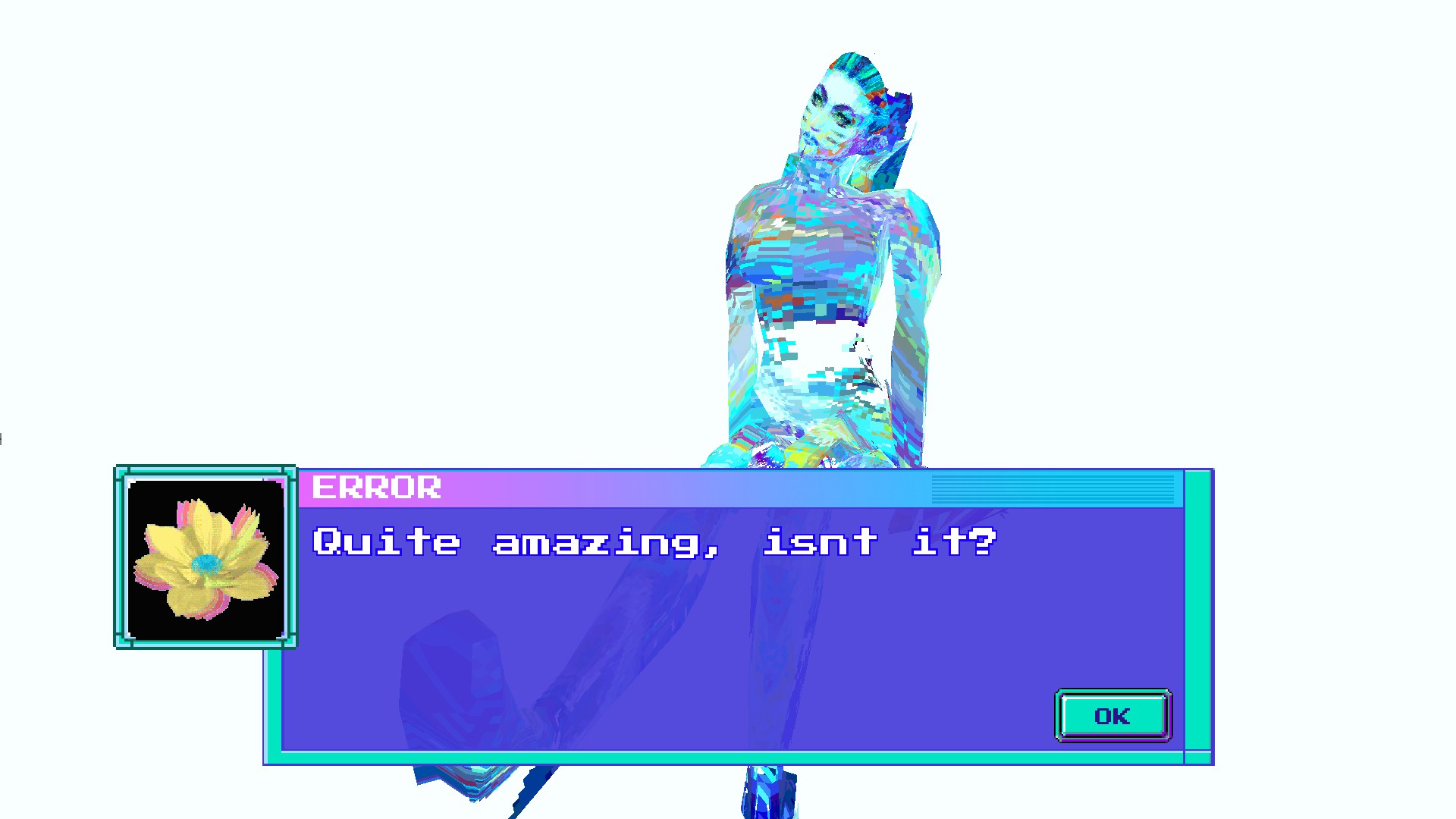
Broken Reality - PC - 2018
A few years ago, I remember sitting on my sectional, browsing Youtube on our new 65” Samsung television from Costco, most likely enjoying a dinner of Hamburger Helper, and deciding on what to watch. This was back when I was enthralled by videos discussing retro and/or indie games, so eventually I came across a video by Dungeon Chill highlighting a game that, at first, hooked me with its striking visuals. It was distinctively “V A P O R W A V E-esque,” and that was enough to pique my interest. In retrospect, I knew at that point I was somewhat late to the craze, but even today the aesthetic and ideas still resonate with me. But as I watched, the visuals, the music, the ironic references, all but enthralled me, beckoning me to explore all of its Web 1.0-laden nooks and crannies. Shortly after being convinced that the game was worthwhile, I downloaded it to my computer and set off on a journey throughout the world of NATEM 2045 for myself.
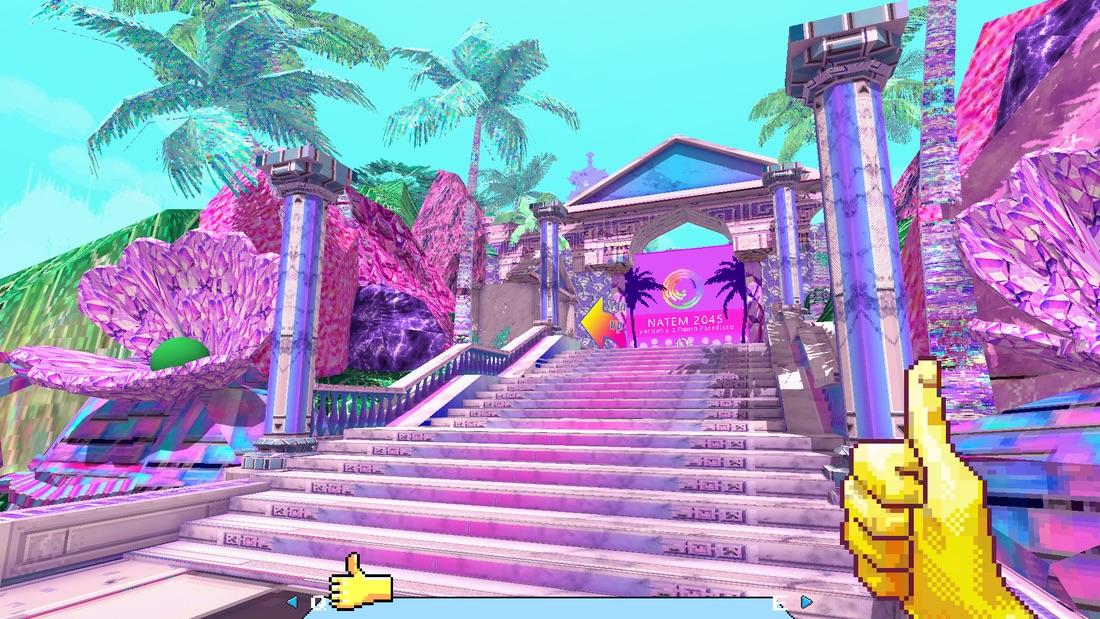
The game is presented in a first-person perspective; and though it’s not a style of gameplay that I typically pursue, I didn’t find it particularly overwhelming or difficult to get a handle of. You approach the entrance to the NATEM server and you are greeted by the resident guide, Onee-chan. She appears to briefly recognize you but immediately corrects herself as she prepares a new account for you to use. You immediately gain access to the metaphorical foyer of NATEM 2045, Domo Paradisso. Here, you will be introduced to the game’s core mechanics as you track down the tools you’ll need for surfin’ the net.
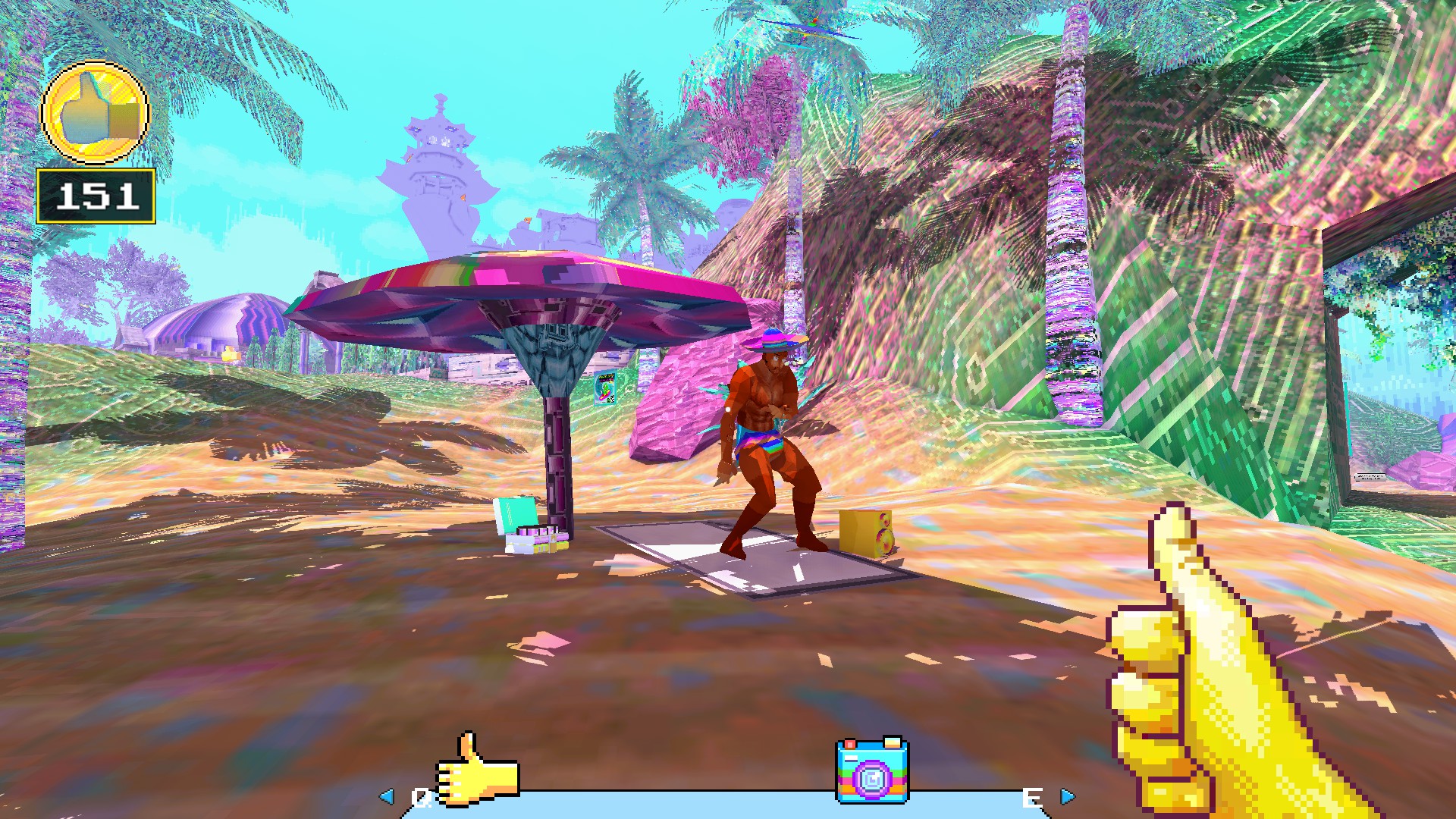
The first, and arguably most important tool, is the “liker,” which resembles a pixelated emoji hand stuck with a perpetual thumbs up. It’s a multi-purpose tool, allowing you to interact with objects in the world, as well as initiating conversations with other netizens. Many of the people you’ll encounter appear as featureless humanoids in a tint of chartreuse, but other, more notable people will have unique avatars, indicating that you can strike up a conversation with them.
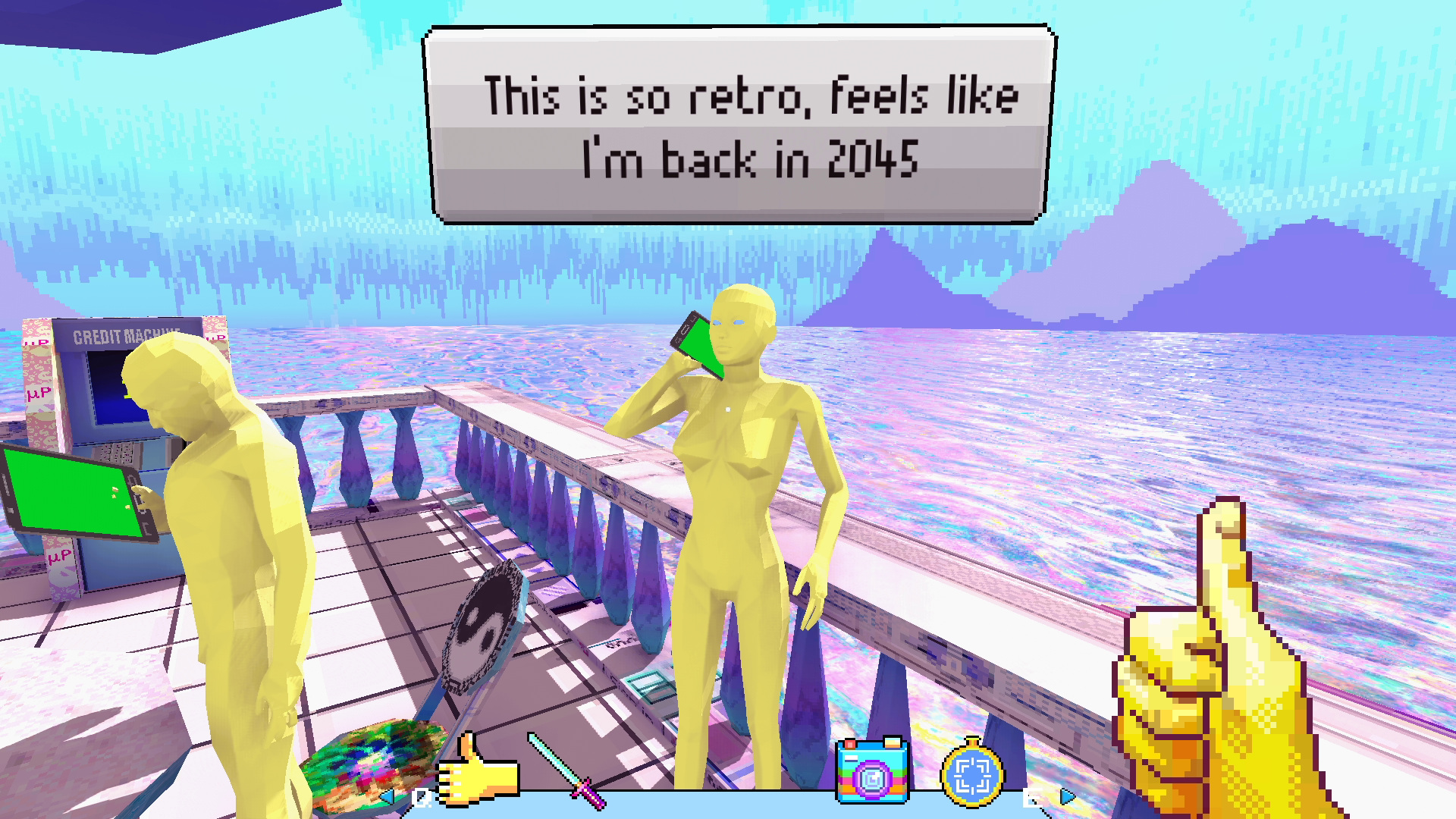
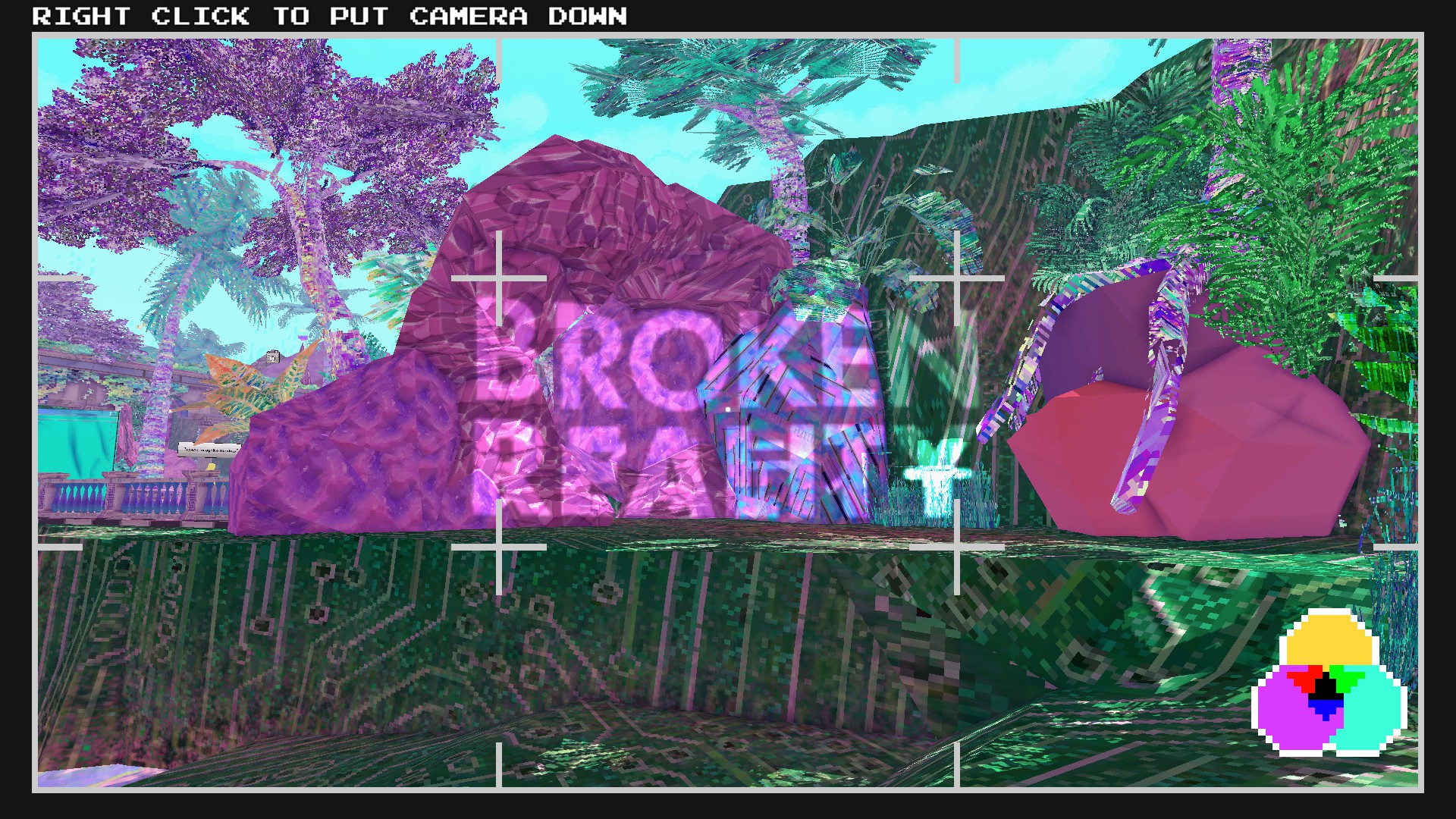
This virtual world runs on a currency called “likes.” The liker tool can help you collect likes from interacting with cheeky ads lying around, or by helping other netizens with quests or random tasks. The camera is another useful tool to help collect likes. Sprinkled around the world are little camera icons. Whip out your camera, line up the icons within the frame, and snap a photo. The more icons you capture with the frame, the more likes you will gain. Likes increase your rank, and help you unlock new areas of NATEM, so they are worthwhile to collect.
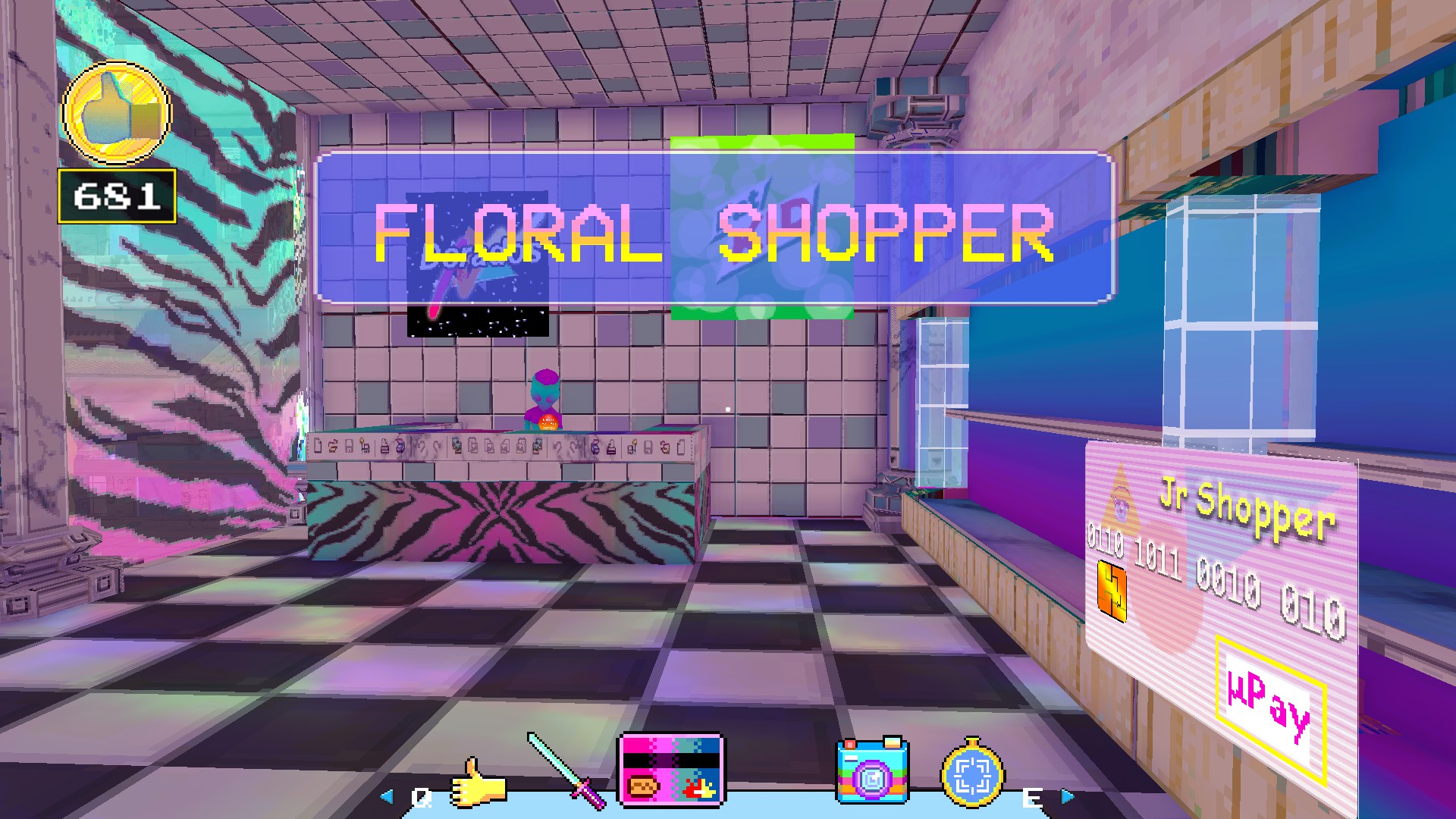
In Domo Paradisso, you’ll find a few other helpful tools, some with the help of NPCs. Chozai, the retired samurai master, sends you on a short quest to recover the three pieces of his katana. It’s allegedly made “with the darkest materials from the deepest webs,” but it has the ability to slice through even the worst of viruses and pop-ups, making it essential to have on our journey. Also, the trio of Moai near the shopping plaza ask you to acquire some items from the mall below. Onee-chan helps you open a line of credit with the Jr. Shopper credit card. Take this card into any store, swipe the object you want with it, and PRESTO! You are now in the thralls of credit card debt (funnily enough, you will have to settle your debt later in the game). But you can also put your shopping skills to the test and see how much you can spend in the shopping minigame; the more you spend, the more of those sweet, sweet likes you’ll receive, so spend it up and live a little!
To round out our arsenal, you’ll need to find the “bookmarker” and “hyperlinker” tools. These tools will help out more with traversal of the terrain, and will also lead into some more involved platforming later on. Even though the game is in a first-person perspective, I never found the platforming to be incredibly intense or demanding; a little skill (or trial and error) and you’ll be fine. Once our toolbox is complete, we head up to the pool where we find the “admin” who congratulates us on our assimilation into the NATEM world. He opens the gateway to Axis Plaza, which acts as the hub for all of the other explorable sites on the server. He begins to clue us in into something a little deeper about NATEM, but vanishes before any real details are shared. But with our curiosity piqued, we head on up to Axis Plaza, where our real journey begins.
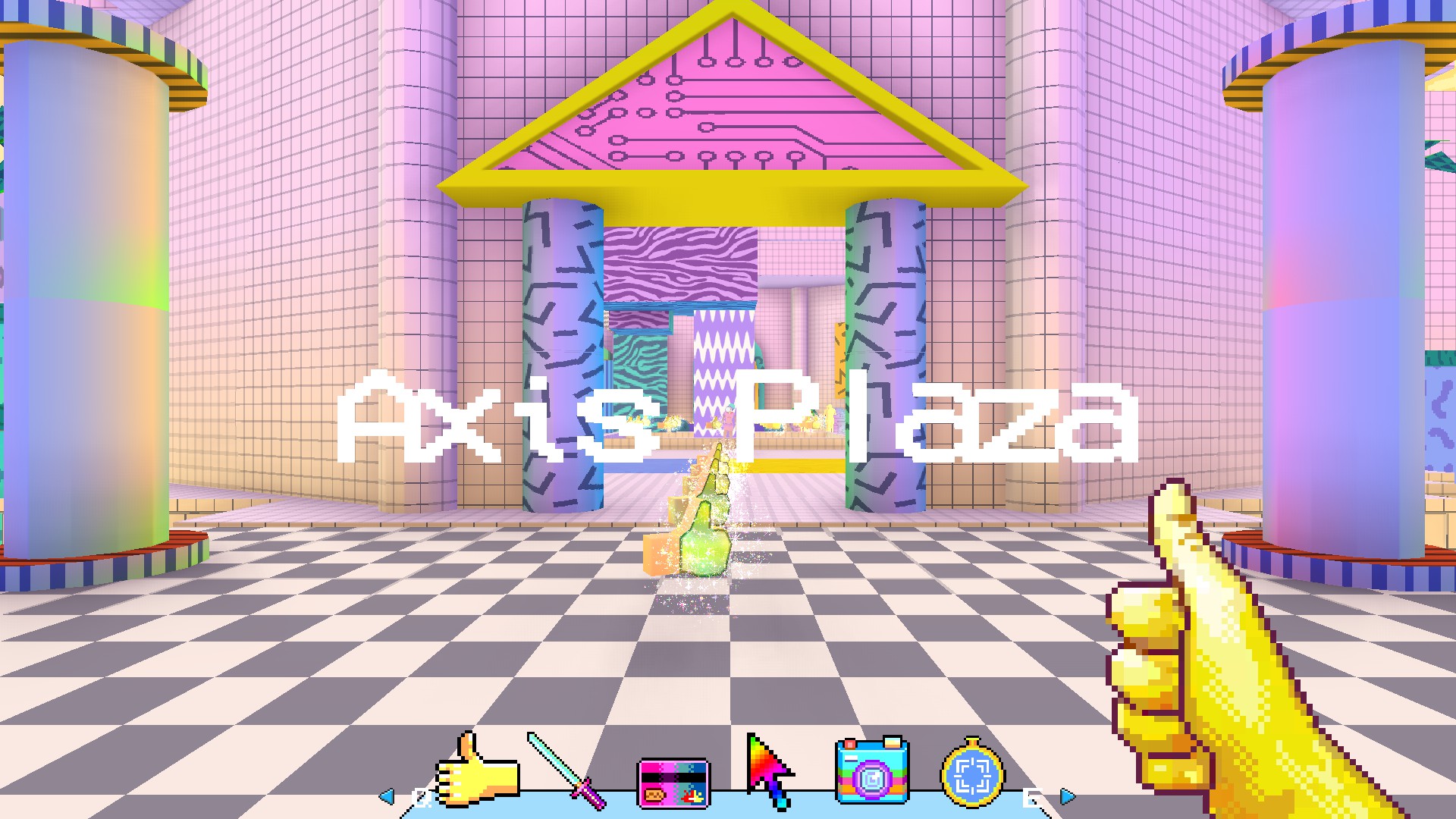
From here on, you’ll explore the various areas NATEM has to offer, interacting with a variety of characters, solving various puzzles, and uncovering the shameful secrets and painful memories of a world once thriving, but ultimately doomed to a paradoxical mix of both obscurity and exclusivity. The story is simultaneously ironic and grounded, and I found myself both envying and pitying the characters and the world itself. There is quite a lot to read through and explore across each site, with a couple of secret areas providing more opportunities to delve deeper into the lore.
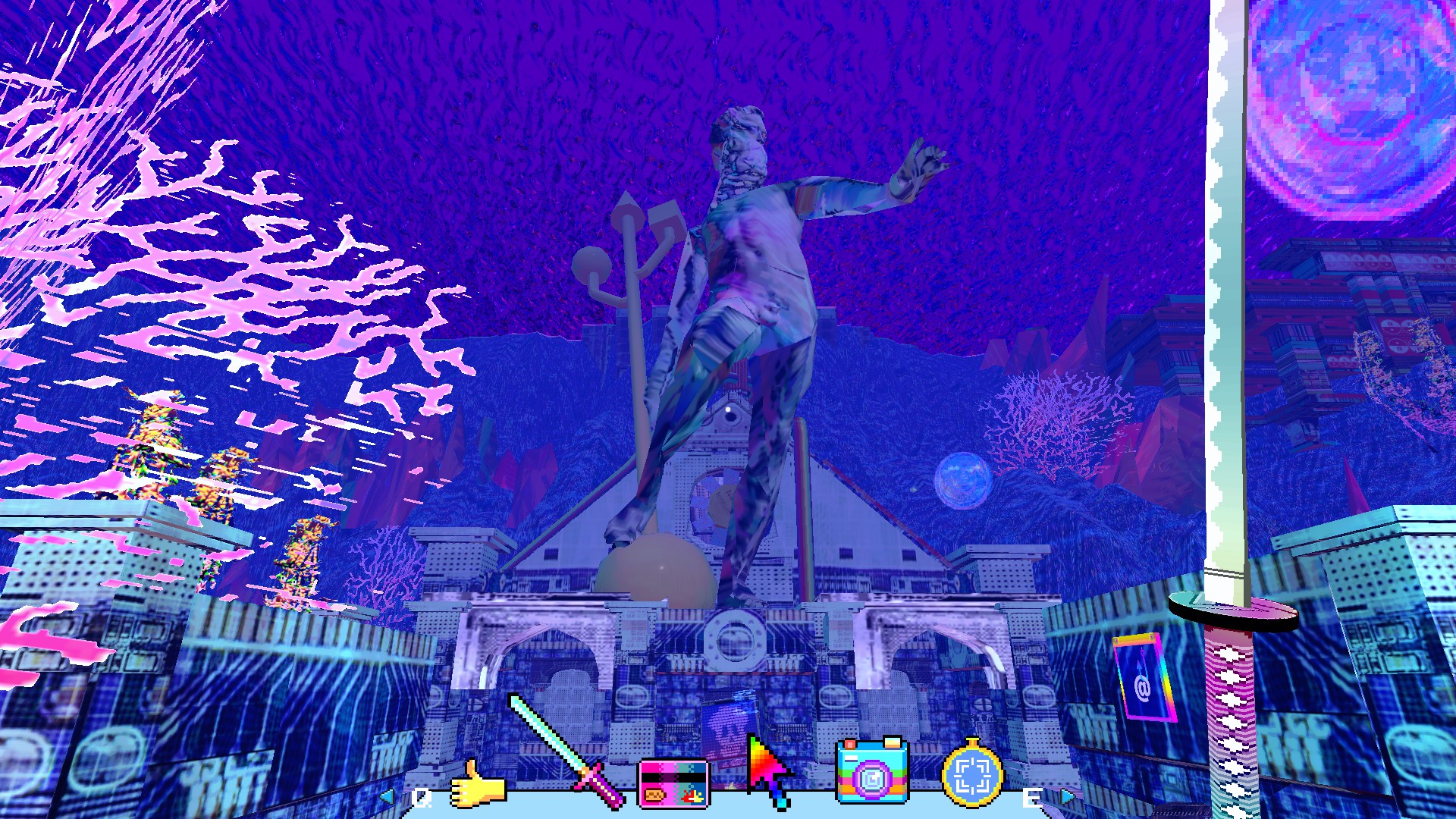
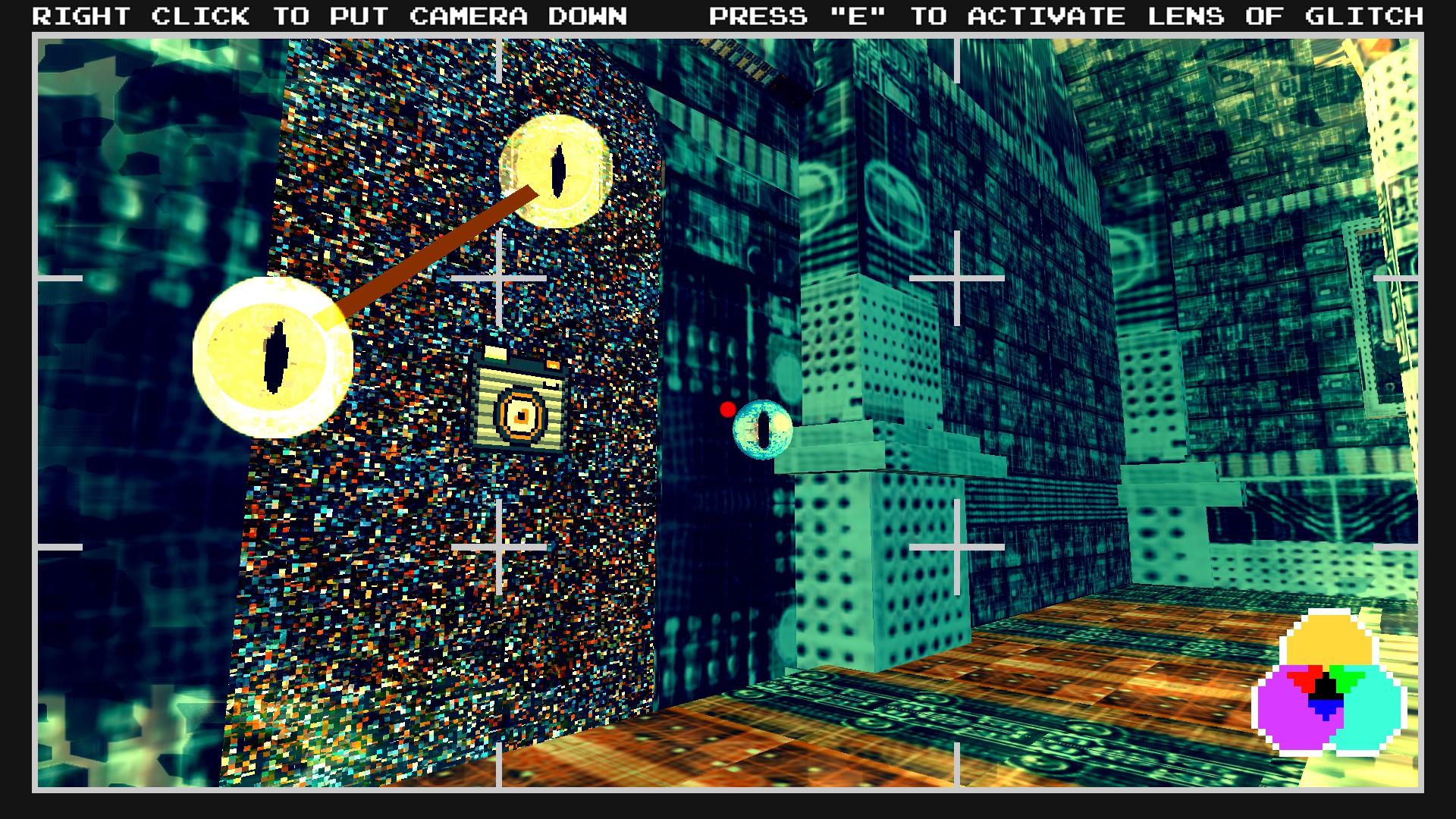
Continuing to explore the sites around NATEM, you’ll find a few upgrades to your tools, a notable one being the Lens of Glitch. Attaching it to the camera allows you to view the world differently, sometimes providing more clarity and other times obscuring things further. Though it does help you solve more complex puzzles, I feel like this acquisition stands out from the rest; it opens your eyes to hidden truths, but the burden of those truths also revokes a certain blissful ignorance you had previously. Even so, I think it lends an important credence to the narrative.
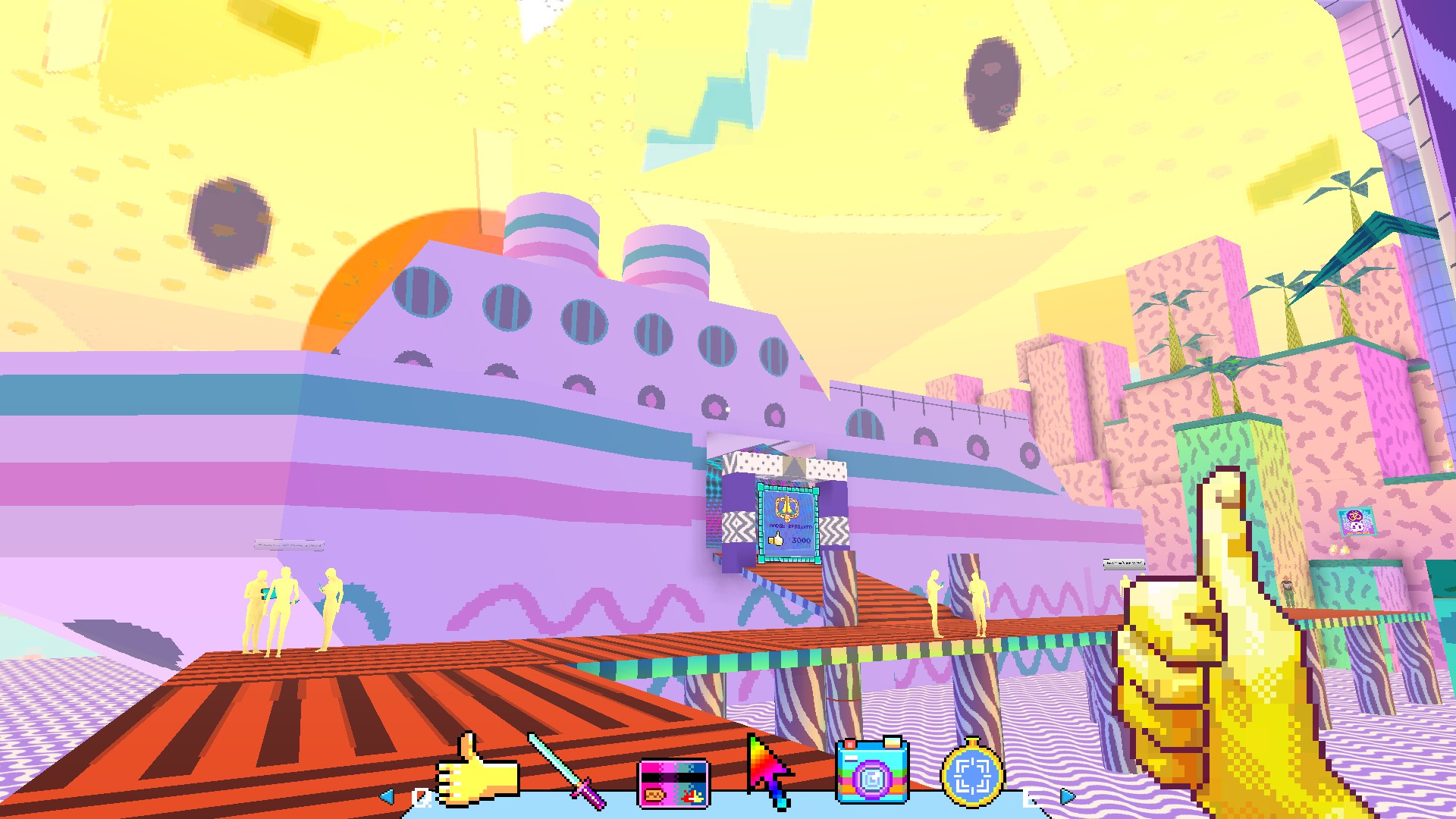
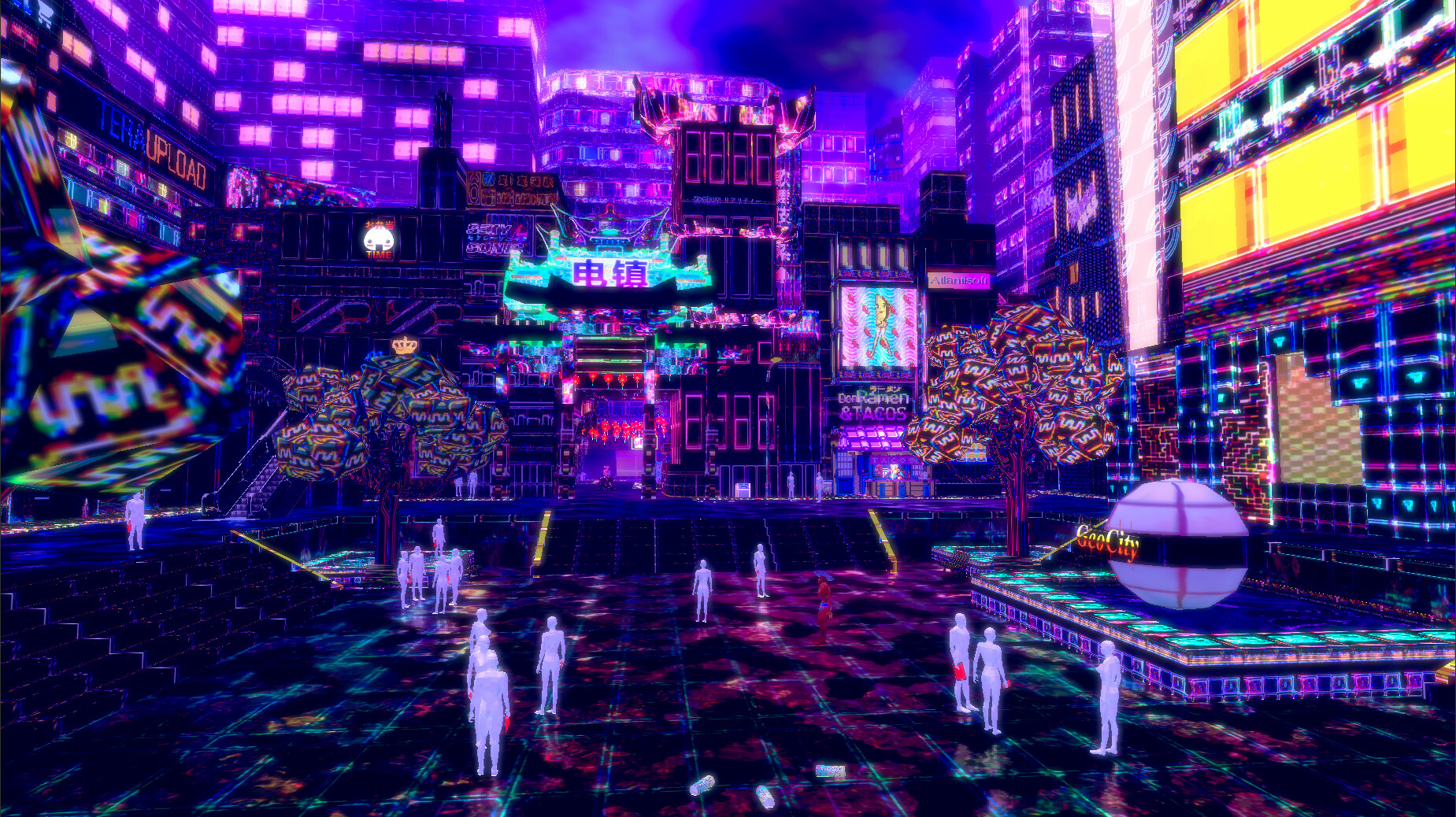
To avoid spoiling the story any further, let’s pivot to the visuals. The aesthetics are what initially drew me into this game, and I will say, they do not disappoint. It’s a perfect encapsulation of the Vaporwave movement and many of its branches and subgenres. We have the holographic shores of Domo Paradisso, the deep underwater ruins of Aquanet, the N64-style of the aptly named “Love Cruise 64,” the glowing neon lights of GeoCity, as well as some more esoteric areas closer to the end of the game. It is all presented in such a beautiful way, each area capturing the details that make them all unique. The references and jokes cleverly written and placed in each area really showcase the care and passion put into the game.
The music complements the visuals greatly. Each site has its own mini soundtrack, with subareas receiving altered mixes or even separate tracks to accompany its own vibe. Though many of the tracks are original compositions, there are a few uses of popular Vaporwave tracks sprinkled around the game, most notably in the mall (Cat System Corp.) Even throughout the original songs, nothing sounds or feels generic; and though each area’s music sounds distinct from each other, they all still feel like a cohesive collection of songs that reflect the variety found with the servers of NATEM.
I find that this game really encapsulates the overarching themes of Vaporwave visually, audibly, and structurally. It started out enticing and enthralling with bright colors, ironically dated memes, and an underlying sense of nostalgia. But beneath that longing for the past, I dug deeper and exposed buried truths and harsh realities. By the end of the story, I was left with a balance of answers and more questions, as well as some sobering food for thought. Broken Reality is a game that was created with both a love for the internet and what it originally stood for, as well as a despair for what has been lost to both the pursuit of “progress” and inevitable passage of time. But I believe it stands as a love letter to the spirit of netizens and the connection and community they created. And in an online landscape inundated with noise and littered with slop, indie games, art, music, and personal websites like these still preserve the original spirit of the internet and create space for voices to be heard, shared, and valued.